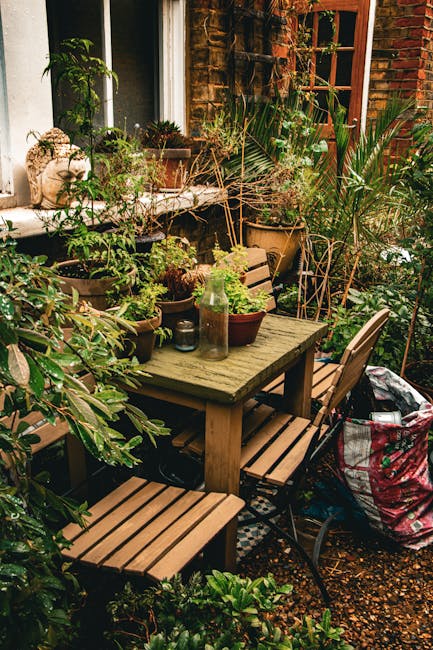
What Aldgate landlords must know about garden permits
If you rent out property in Aldgate, garden changes can look simple on paper and still cause headaches later. A new fence, a shed, a deck, a tree work request, or a full tidy-up can all raise questions about permissions, responsibilities, and whether a permit or approval is needed before anyone starts digging, cutting, or building. That is exactly why understanding What Aldgate landlords must know about garden permits matters. It helps you avoid delays, reduce tenant disputes, and keep your property moving in the right direction without nasty surprises. In a dense London setting, the garden is rarely "just a garden". It can touch planning rules, safety duties, lease terms, neighbour concerns, and maintenance standards all at once.
In this guide, you will get a clear, practical breakdown of how garden permits and permissions usually work, when landlords should pause and check first, and how to handle the process sensibly. We will also cover common mistakes, helpful best practices, and the real-world decisions that often get overlooked until the last minute. Let's make the whole thing a bit less murky.
Why What Aldgate landlords must know about garden permits Matters
Garden work can be deceptively small. A landlord sees an overgrown border, a tired patio, or a leaning tree and thinks, "We'll sort that in a day." But in practice, even modest outdoor changes can trigger permission issues depending on the property type, lease restrictions, conservation considerations, tree protection, drainage impacts, or the scale of the works. In Aldgate, where many properties sit within tightly managed urban surroundings, a poorly planned garden job can create friction fast.
Why does this matter so much? Because a landlord is not only trying to improve appearance. You are also protecting the asset, keeping tenants safe, and avoiding disputes that can drag on for weeks. If work starts without checking the right permissions, you may end up paying twice: once for the job itself and once again to correct it. To be fair, that is the kind of mistake nobody wants to explain to an agent, a tenant, or a freeholder.
There is also the human side. A garden is often one of the first things a prospective tenant notices. It shapes the sense of space, light, and care. A neat garden can make a flat feel calmer. A neglected one can make the whole property feel tired, even if the inside is immaculate. That is why understanding permits and permissions is not just compliance work. It is part of good property management.
For landlords who rely on regular upkeep, services such as garden maintenance and lawn mowing can help keep the space presentable between larger works. And when the garden needs a bigger reset, garden clearance may be the more sensible starting point before any upgrade is planned.
How What Aldgate landlords must know about garden permits Works
First, a useful clarification: people say "garden permit" as a shorthand, but the actual requirement may be a planning permission, a landlord consent, a freeholder approval, a tree-related permission, a building-related approval, or simply written agreement under the tenancy or lease. The exact route depends on what is being changed. That is the part many landlords miss at first glance.
Here is the basic logic. If the work is routine upkeep, it usually does not need formal permission. Think hedge trimming, lawn care, seasonal tidying, minor weeding, or removing debris. But if the work changes the structure, appearance, drainage, boundaries, access, or protected planting, you may need to stop and check before proceeding. Decking, raised beds, large sheds, hard landscaping, major tree work, or substantial garden alterations are the common flashpoints.
In practical terms, the process usually looks like this:
- Identify exactly what will change in the garden.
- Check whether the property is leasehold, freehold, or part of a managed building.
- Review tenancy agreements, lease clauses, and any estate rules.
- Assess whether the work is cosmetic, structural, or likely to affect drainage, privacy, or access.
- Check whether trees, boundaries, or listed/conservation factors are involved.
- Get the right written approval before work starts.
A small example: replacing overgrown shrubs with a neat planted border usually feels straightforward. Adding a timber deck where there was once lawn is another matter entirely. The second project can alter levels, runoff, and usable surface area, and it may bring different approval questions. Same garden. Very different level of scrutiny.
If your work will involve structural planting, terraces, retaining features, or a more involved redesign, it is worth reviewing the broader landscape gardening approach first. For more ambitious transformations, landscaping work often needs more careful planning than a quick tidy-up.
Key Benefits and Practical Advantages
Doing the permissions work properly does more than keep you out of trouble. It improves the whole project. Landlords who check the rules first tend to save time, avoid rework, and make better decisions about scope and cost. There is also a confidence factor. Once you know the boundaries, you can move faster.
- Fewer costly delays: You avoid stopping work halfway through because a consent was overlooked.
- Less tenant conflict: Clear approvals help explain what is happening and why.
- Better asset protection: The garden is upgraded in a way that suits the property rather than fighting against it.
- Reduced risk of disputes: Neighbours, freeholders, and managing agents are less likely to push back when things are documented.
- Cleaner contractor instructions: A good brief means less confusion on site. Simple, but powerful.
There is also a practical maintenance benefit. Once permissions are understood, recurring work becomes easier to plan. Regular hedge shaping, grass cutting, and seasonal clean-ups can preserve the garden's condition without turning every visit into a mini project. If you are comparing long-term upkeep options, hedge trimming and routine maintenance can do a lot of quiet work in the background. Not glamorous, perhaps, but very effective.
And when the garden is being prepared for new tenants, a well-timed tidy can make the handover feel smooth instead of rushed. That small difference matters more than people think. A neat, functioning garden just feels like care.
Who This Is For and When It Makes Sense
This topic is relevant for more than one kind of landlord. In practice, it matters if you own a single rental flat with a shared rear yard, a maisonette with a small private garden, a house in multiple occupation, or a portfolio property that needs reliable upkeep. The bigger the management picture, the more useful it becomes to have a repeatable process.
You should pay special attention if any of the following apply:
- The property is leasehold and outdoor areas may be controlled by the freeholder or management company.
- The garden includes mature trees or older boundary features.
- You are planning decking, paving, raised planters, fencing changes, or major clearance.
- The tenant wants to make changes themselves and has asked for permission.
- The space has become neglected and needs more than basic mowing or pruning.
It also makes sense where turnover is high. If tenants come and go frequently, outdoor spaces can be left in a mixed state. One tenant's patio furniture, another's planters, a few seasons of weather, and suddenly the space needs a proper reset. That is often where landlords start asking the right questions. Frankly, usually a bit late, but still fixable.
For landlords who want a reliable upkeep rhythm rather than a one-off rescue, a maintenance plan can be easier than reacting to visible problems. Services like services overview can help you think more broadly about how different garden tasks fit together over time.
Step-by-Step Guidance
Here is the practical sequence we recommend for landlords who are unsure whether a garden permit or approval is needed. It is simple enough, but the detail matters.
- Define the exact work. Write down what is changing. "Improve the garden" is not enough. Say whether it is clearance, turf replacement, tree removal, decking, fencing, or planting.
- Check ownership and control. Freehold, leasehold, management company, and tenancy arrangements can all affect permission.
- Separate maintenance from alteration. Routine upkeep is treated differently from permanent or semi-permanent changes.
- Look for risk flags. Trees, boundary walls, drainage, retaining edges, and shared access all need extra care.
- Ask for written approval where needed. Keep it on file. A quick phone call is helpful, but a paper trail is better.
- Brief the contractor properly. They should know exactly what is allowed and what is not.
- Keep records and photos. Before-and-after pictures are surprisingly useful if questions come up later.
If the garden is already tangled, blocked, or full of old waste, starting with garden clearance can make the permissions picture easier to read. Once the clutter is gone, you can see what is actually there. Sometimes that alone changes the decision. A hidden tree root or an old slab edge can turn a quick idea into a more thoughtful project.
When tree work is on the table, be extra cautious. Even if the tree looks ordinary, there may be restrictions or safety implications. That is where tree lopping and removal becomes a job for proper checking rather than guesswork. A landlord really does not want to be the person who "just took a branch off" and then discovered it was not that simple.
Expert Tips for Better Results
After you have handled enough outdoor jobs, a few patterns become obvious. The landlords who get the smoothest outcomes tend to do the boring bits well. The plan is clear, the approval trail is tidy, and the gardener or contractor is not left to interpret vague instructions. That sounds basic, but it is where a lot of projects wobble.
Tip 1: Treat the garden as part of the property strategy, not an afterthought. A good garden can support rentability and tenant satisfaction. A neglected one can drag both down. Keep that bigger picture in mind when deciding how much work to authorise.
Tip 2: Separate cosmetic and permanent changes. Fresh planting, mulching, mowing, and pruning are one thing. Decking, hard edging, new structures, or major level changes are another. If the work is not easily reversible, assume it may need more scrutiny.
Tip 3: Put neighbour impact on your radar early. Noise, access, debris, and privacy all matter in tight London settings. A job that seems fine internally can still create a complaint if it is badly timed or poorly communicated.
Tip 4: Keep seasonal timing in mind. Early spring can be ideal for planning, while mid-summer or late autumn may be better for some planting and clearance tasks. The weather may look fine at 8am and then turn damp and awkward by lunch. London keeps you humble like that.
Tip 5: Ask for the maintenance outcome you actually want. "Make it tidy" is not a brief. Better is: tidy the rear garden, reduce hedge height, remove waste, protect the mature tree, and leave the space ready for tenancy photos. Clearer instructions mean fewer surprises.
For presentational upkeep, combining lawn mowing with seasonal maintenance can make a property feel instantly better cared for. If the space includes timber features or you are considering a more structured redesign, decking services may be worth exploring only after permissions are properly checked.
Common Mistakes to Avoid
Some mistakes are so common they almost deserve a warning sign in the garden gate. The good news is that most of them are avoidable once you know what to look for.
- Starting work before checking approvals. This is the biggest one. Once work has begun, fixing permission issues becomes harder.
- Assuming all garden work is "maintenance". It is not. Maintenance keeps the property as it is. Alteration changes the property.
- Ignoring lease terms. Shared gardens, boundary changes, and even storage features can be controlled by the lease.
- Forgetting tree-related constraints. Mature trees can be protected or sensitive, and safety matters too.
- Using vague contractor instructions. If you are not specific, the job may drift.
- Not documenting approval. Memory is not a compliance system.
- Overlooking sustainability and waste handling. Garden waste, timber offcuts, soil, and old materials all need proper disposal.
Sometimes the mistake is more subtle. A landlord may approve "a tidy-up" and later discover that the contractor removed features the tenant liked, or disturbed a planting layout that helped privacy. The job was done, technically. But it did not solve the right problem. That can be awkward, to put it mildly.
Tools, Resources and Recommendations
You do not need a mountain of tools to manage garden permissions well. What you do need is a simple system and a few dependable records. A folder, digital or paper, is often enough.
- Property file: Keep lease notes, landlord approvals, contractor quotes, and photographs together.
- Garden condition log: Record the state of the garden at the start and after each visit.
- Work brief template: A short checklist of what is permitted, what is not, and who approved it.
- Before-and-after photos: These are useful for future tenants, agents, and dispute resolution.
- Seasonal maintenance calendar: Helps you plan pruning, mowing, waste clearance, and inspection points.
If you are comparing providers, check that they are transparent about process, safety, and scheduling. The useful questions are plain ones: How do they handle access? What happens to waste? Are they insured? Do they provide a written quote? The pricing and quotes page is a sensible place to start if you want to understand how estimates and scope are handled before work begins.
It is also worth reviewing a provider's approach to sustainability if your garden project will generate waste. Reuse, recycling, and careful disposal should not be an afterthought. A responsible approach can save mess and make the job feel cleaner from start to finish. For more on that side of the process, see recycling and sustainability.
Law, Compliance, Standards and Best Practice
Garden permissions for landlords in Aldgate are usually shaped by a mix of planning, lease, tenancy, and safety considerations. The exact legal route depends on the property and the work involved, so caution is wise. Rather than assuming one rule applies to every outdoor job, it is better to ask: does this change the property in a lasting way, does it affect a shared part of the building, or does it involve a tree, boundary, access route, or drainage feature?
That question alone resolves many situations. Routine gardening tasks such as mowing, trimming, and general upkeep normally sit in a lower-risk category. Structural additions, hard landscaping, or significant tree work need more care. If a garden is part of a leasehold arrangement, written consent may be needed even for projects that sound ordinary. And if a tree is involved, safety and preservation concerns may come into play. Better to check first than unwind work later.
Best practice is also about evidence. Keep approvals in writing, keep contractor instructions clear, and keep a note of who decided what. If the property is managed through agents or a resident manager, make sure everyone is aligned. A lot of friction happens simply because one person thought another person had already approved the change. Classic admin gremlin stuff.
From a standards point of view, strong garden management means safe working methods, sensible waste handling, and a clear understanding of what the site needs. If a contractor is carrying out heavier work, ask how they manage access, debris, and site protection. You can also review health and safety policy information and insurance and safety details to understand how risk is handled before anyone starts on site. Those details matter more than people often realise.
Options, Methods, or Comparison Table
Different garden works create different permission questions. Here is a simple comparison to help landlords think clearly before they act.
| Type of work | Typical purpose | Permission risk | Landlord note |
|---|---|---|---|
| Routine mowing and trimming | Keep the garden neat and usable | Usually low | Good for regular tenancy upkeep and quick presentation fixes |
| Garden clearance | Remove overgrowth, waste, and neglected material | Usually low to medium | Check whether anything hidden under the clutter needs approval before removal |
| Tree work | Reduce risk, improve light, or remove unsafe growth | Medium to high | Always check carefully if the tree may be protected or shared |
| Decking or paving | Create a usable outdoor surface | Medium to high | May affect drainage, levels, and lease or planning controls |
| Landscape redesign | Change the look and function of the garden | Medium to high | Often needs a more detailed brief and written sign-off |
The table is not a legal verdict. It is a practical way to think about risk. If something is reversible and clearly maintenance-based, the process is usually simpler. If it is structural, permanent, or likely to affect neighbours or shared building elements, assume more checking is needed. Simple rule, but helpful.
Case Study or Real-World Example
A landlord managing a compact rear garden in Aldgate had a familiar problem: the space looked tired, the grass was patchy, and there was a corner full of old planters, broken edging, and climbing ivy that had taken over more than it should have. The first instinct was to replace the whole thing with decking and a few raised beds. Reasonable idea, but it would have been the wrong first step.
Instead, the landlord paused, reviewed the property terms, and asked for a full garden assessment. It turned out the existing layout included a boundary feature that needed careful handling, and one of the trees was more significant than it first looked. The immediate solution became a phased approach: clearance first, then pruning and maintenance, then a more considered design plan.
The benefit was not dramatic in the cinematic sense. No one walked into the garden and gasped. But the result was better: fewer disputes, a cleaner work plan, and a garden that could be maintained rather than repeatedly rescued. That is usually the better outcome anyway. Less heroics, more control.
In cases like this, combining garden maintenance with careful planning usually works better than rushing into a major install. If a full redesign still makes sense after checks are done, then moving through landscape gardening or broader landscaping can follow with a cleaner brief and fewer unknowns.
Practical Checklist
Use this before you approve any garden work as an Aldgate landlord. It is simple, but it catches a lot.
- Have I clearly defined the work as maintenance, clearance, or alteration?
- Is the property freehold or leasehold?
- Does the lease, tenancy, or management arrangement require written consent?
- Could trees, drainage, boundaries, or shared spaces be affected?
- Will the work change levels, surfaces, access, or privacy?
- Do I have written approval if one is needed?
- Has the contractor been briefed in plain English?
- Have I checked safety, insurance, and waste handling?
- Do I have before-and-after photos?
- Have I thought about how the garden will be maintained after the work is complete?
If you can answer yes to most of the above, you are usually in a much safer place. If not, pause and tidy up the admin first. A bit of patience now can save a lot of irritation later.
Conclusion
Garden permissions are one of those landlord tasks that look minor until they are not. In Aldgate, where outdoor space is valuable and often tightly governed, getting the approvals side right can save time, money, and hassle. The key is to separate routine maintenance from actual alteration, keep good records, and treat structural or tree-related work with extra care. That simple discipline goes a long way.
What Aldgate landlords must know about garden permits comes down to this: check before you change, document what you approve, and choose a maintenance approach that supports the property long term. That way, the garden works for the tenancy rather than against it. And honestly, that is the quiet win most landlords are after.
If you are planning garden work and want a clear, practical next step, take a look at the available services, understand the process, and choose the option that fits the property rather than forcing the garden into a rushed plan.
Get a free quote today and see how much you can save.
Frequently Asked Questions
Do Aldgate landlords always need a permit for garden work?
No. Routine maintenance such as mowing, trimming, and general tidying usually does not need a formal permit. The question becomes more serious when the work is structural, permanent, or affects trees, boundaries, drainage, or shared areas.
What counts as garden maintenance rather than alteration?
Maintenance keeps the garden in broadly the same condition. That includes mowing, hedge cutting, pruning, weeding, and clearing waste. Alteration changes the layout, structure, or function of the garden, such as adding decking or removing a substantial tree.
Can a tenant ask for garden changes without landlord approval?
They can ask, but they should not start work without the landlord's written permission. In leasehold or managed buildings, additional consent may also be required. Always check the tenancy terms first.
Is tree work more sensitive than other garden tasks?
Usually, yes. Tree work can involve safety concerns, ownership issues, and possible restrictions. Even work that looks small can matter if the tree is mature, shared, or otherwise sensitive.
Does a small garden need the same checks as a bigger one?
Yes, in principle. The size of the garden matters less than the type of work being done. A small rear yard can still involve lease restrictions, shared boundaries, or drainage issues.
Should I get written approval for every garden job?
For routine maintenance, not necessarily. For anything beyond normal upkeep, written approval is the safer route. It keeps expectations clear and helps avoid disputes later.
What if the garden has been neglected for years?
Start with clearance and inspection rather than jumping straight into redesign. Once the site is visible, it is much easier to see what needs permission, what needs repair, and what can be maintained simply.
Are decking and paving usually more complicated than planting?
Often, yes. Decking and paving can affect levels, appearance, water runoff, and long-term use of the space. Planting is usually less sensitive, though large changes can still need checking.
How can landlords reduce the risk of garden disputes?
Be clear, be documented, and be specific. Tell tenants what is allowed, note what has been approved, and keep photographs of the garden before and after the work.
What is the safest first step if I am unsure?
Pause and assess the type of work. If it sounds like maintenance, it may be straightforward. If it sounds like a change to the property, get written confirmation before proceeding. That caution pays off.
Can garden clearance be useful before deciding on permissions?
Absolutely. Clearance often reveals hidden issues such as tree roots, boundary details, damaged edging, or drainage problems. Once the clutter is removed, the next decision becomes much easier.
Where should I look if I need help planning ongoing garden upkeep?
Start with a service overview and think about what the garden needs over time, not just today. A regular maintenance plan is usually simpler and more cost-effective than dealing with a neglected space every few months.